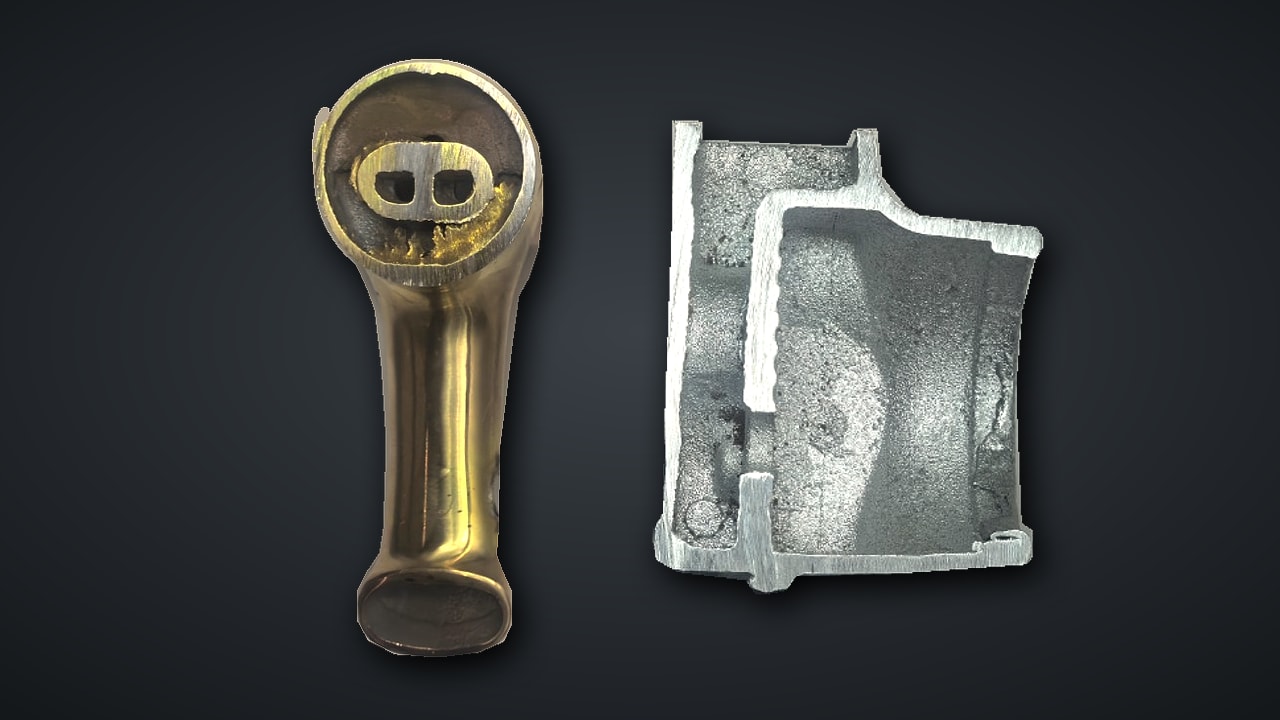
The short answer: choose zinc alloy when price is the priority and the faucet is for price-driven retail. Choose brass for projects, mid-to-high-end ranges, hot or hard water, and buyers who expect a long service life. Neither material is right for every order.
"Is this brass or zinc?" and "Why is the brass version so much more expensive?" are questions we hear often. Both are normal, widely used faucet materials. What matters is that the material fits your price point, your market and how the faucet will be used, and that it is written clearly in your quotation.
ITALOMIX makes both brass and zinc alloy faucets, and body material is confirmed per model in the quotation. This guide explains how we would think about the choice.
1. Brass vs zinc alloy at a glance
| Brass | Zinc alloy | |
|---|---|---|
| Typical cost | Higher | Lower |
| Weight (same design) | Heavier | Lighter |
| Corrosion resistance | Better, especially with hot or hard water | Lower; depends heavily on plating and water quality |
| Typical service life | Longer | Shorter; varies with use and water |
| Plating | Plates well and is stable | Needs careful pre-treatment |
| Typical use | Projects, mid-to-high-end retail | Entry-level and price-driven retail |
This is a general guide. The real result also depends on the alloy grade, wall thickness, plating and cartridge.
2. How the two materials really differ
Cost
Copper costs more than zinc, and brass contains a lot of copper. Brass bodies are usually forged or cast and then machined. Zinc alloy bodies are usually die-cast and need less machining. That is why the same design costs clearly more in brass. For approximate EXW price ranges by product type, see our MOQ, lead time & cost guide.
Weight
Brass is denser, so a brass faucet feels heavier than a zinc alloy faucet of the same design. But weight is only a clue, not proof. Wall thickness, fittings and added parts all change it.
Corrosion and service life
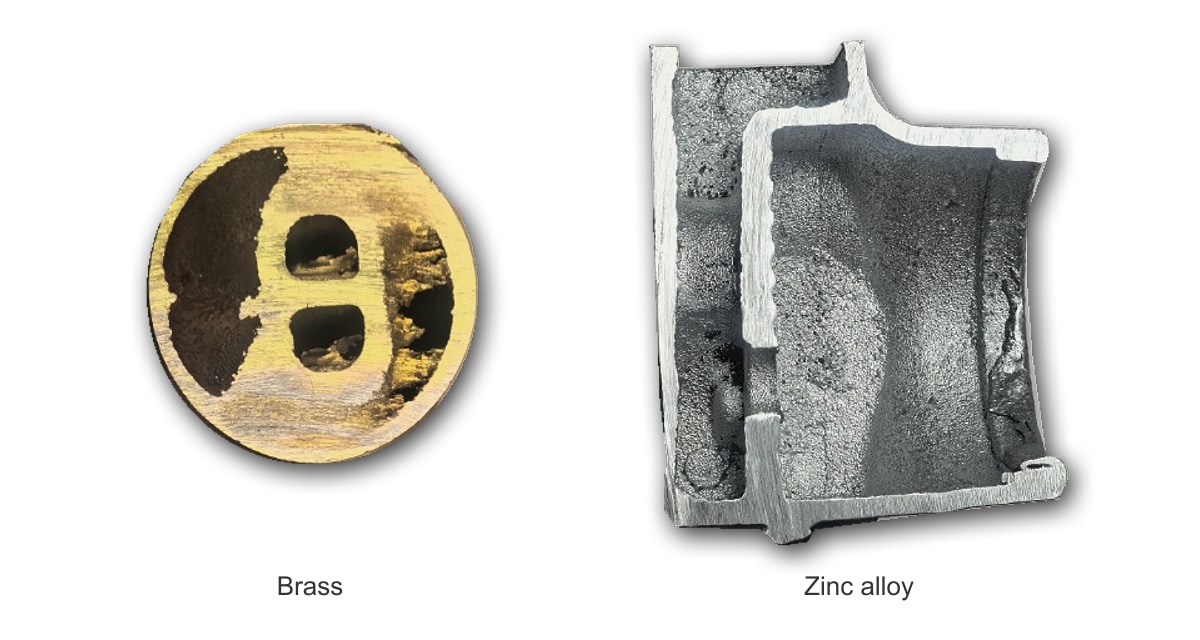
Zinc alloy is more likely to corrode from the inside when it is in long-term contact with water, especially hot, hard or chlorinated water. It generally has a shorter service life than brass. Brass is not perfect either: some brass can lose zinc over time (this is called dezincification). Good alloy and good process reduce that risk.
Plating
Plating adhesion is the key risk with zinc alloy. If pre-treatment is poor, the plating can blister or peel. Brass plates more easily and more stably. Whichever material you choose, ask for the salt spray test result for the finish you order.
Which parts touch the water?
The waterway is the path water takes through the faucet: from the inlet hoses, through the body and cartridge, to the spout and aerator. The layout differs from model to model, so the body material alone does not tell you everything.
Some brass contains lead to make it easier to machine, and some markets limit lead or control which materials may touch drinking water. If this matters in your market, ask your supplier two things before ordering: which materials are in contact with water on that model, and whether a material composition or test report is available.
3. What the ceramic cartridge does
A single-lever mixer controls water flow and temperature with two ceramic discs that slide against each other. Ceramic is hard and wear-resistant, so these cartridges are less likely to leak than old rubber washers.
The cartridge and the body are two separate choices. A zinc alloy faucet can have a ceramic cartridge, and so can a brass one. As a rough guide, leaks and a poor handle feel often come from the cartridge, while cracks and corrosion usually come from the body.
Ask your supplier about:
- Cartridge size and supplier
- Whether the cartridge can be replaced
- The endurance test result
We confirm the cartridge for each model in your quotation.
4. Which material fits your market and price point
These are general patterns, not rules. Your own customers and competitors matter more.
Middle East
Price-competitive wholesale channels often use zinc alloy for entry-level ranges. Hot climates and hard water in some areas put more demand on corrosion resistance and plating, so brass usually suits projects and mid-to-high-end retail better. Complete matching series are common. See our Middle East page.
South America
Buyers here mostly order kitchen mixers and simple, value-for-money models. Zinc alloy can suit retail price bands. Distributors who care more about returns and reputation may prefer brass. See our South America page.
Africa
Single cold taps and basic mixers lead, and budgets are tight. Water quality varies widely, so compare durability and replacement cost together, not just the purchase price. See our Africa page.
Europe & Balkans
Buyers often ask for CE and pay closer attention to materials in contact with drinking water. Brass is common, and zinc alloy usually appears in lower-priced retail ranges. Our CE certificate to EN 817:2024 is on our certificates page. If you need other documents, tell us the destination country and we will confirm which ones we can provide. See our Europe & Balkans page.
A simple rule of thumb
| Your situation | Usually the better fit |
|---|---|
| Price-driven retail, entry-level range | Zinc alloy, if plating and cartridge are good |
| Projects, mid-to-high-end retail | Brass |
| Hot or hard water, long service life expected | Brass |
| Both customer groups | A mix: zinc alloy for entry level, brass as your main range |
Mixed-model orders are accepted, so one order can carry both.
5. How to check what you are buying
Plating hides the metal underneath, so a brass faucet and a zinc alloy faucet can look the same. These checks help.
Compare the weight
Weigh two samples of the same design and size. A clear difference is a useful clue, but do not rely on weight alone.
Look at a cut or a hidden scratch
On a sample, check a cut or a scratch in a hidden spot. Brass is yellow inside. Zinc alloy is grey-white. You can also ask the supplier for a cut sample or a photo of one. A magnet will not help, because neither brass nor zinc alloy is magnetic.
Read the quotation
If a "brass" price is close to a zinc alloy price, ask why. Your quotation should state the body material, cartridge and finish for each model. If needed, arrange a third-party inspection.
For a complete supplier checklist, read How to Choose a Reliable Faucet Manufacturer in China.
6. What ITALOMIX can offer
ITALOMIX is the faucet brand of Taizhou Emann Sanitary Ware Co., Ltd., founded in 2006. We make our faucets in our own 35,000 m² factory in Taizhou, Zhejiang, China, with CNC machining, precision forging and automated sanding and polishing.
- Materials: brass and zinc alloy, with body material, cartridge and finish confirmed per model
- Range: 334 catalog models on this site and 500+ in our full range — kitchen mixers, basin mixers, bath & shower mixers and single cold taps
- Order terms: MOQ 60 pcs per model, mixed-model orders accepted, samples in about 7 days, bulk production typically 25–35 days depending on quantity, finish and packaging, payment by T/T
- Quotations: normally FOB Ningbo, with a reply within 12 hours
- Certificates: CE to EN 817:2024 and ISO 9001:2015, on our certificates page
- Finishes and OEM: chrome, black, brushed gold, titanium gold, white, gunmetal grey and more, with OEM & ODM options for logo, finish and packaging
Tell us your market and target price, and we will suggest brass or zinc alloy models that fit.
FAQ
Is a zinc alloy faucet good enough?
Yes for many price-driven retail ranges, if the plating and cartridge are good. For projects, hot or hard water and long service life, brass is usually the safer choice.
How long does a zinc alloy faucet last compared with brass?
It depends on water quality, use and plating. In general, zinc alloy has a shorter service life than brass.
Why is a brass faucet more expensive than a zinc faucet of the same design?
Brass costs more as a raw material, usually needs more machining, and makes a heavier body.
Does a zinc alloy faucet have a ceramic cartridge?
It can. The body material and the cartridge are separate choices. We confirm the cartridge for each model in your quotation.
How can I tell if a faucet is brass or zinc alloy?
Compare the weight of two samples, check a cut or a hidden scratch, and make sure the body material is written in the quotation.
Do you make both brass and zinc alloy faucets?
Yes. ITALOMIX makes both, and body material is confirmed per model in your quotation.
Get the right material for your market
- Download the 2026 catalog
- Tell us your market and target price on WhatsApp — we reply within 12 hours
- Or send your requirements through the contact page